How to Create and Save an Email Template in Gmail
Updated 6 min read
Table of contents
In Gmail, email templates are a way to create and save email messages that you can use over and over again. If there’s a message you need to send out regularly, it’s probably best to use an email template.
Email templates can include thank-you messages, answers to common questions, or follow-ups after a customer interaction. With a template, you can reduce the number of mistakes you might make from repeatedly writing out the same message.
This tutorial will show you how to create a template in Gmail and some best practices for managing your Gmail email templates.
How to make and save an email template in Gmail
Step 1: Enable email templates in Gmail Settings
Use Gmail on a computer to create and use templates. First, click the gear icon and select “See all settings.” Open the “Advanced” tab at the top and find “Templates.”

Select “Enable,” then “Save Changes” at the bottom of the page.
Step 2: Start drafting Gmail email template
Now that Gmail email templates are enabled in your account, start drafting your message. You can use placeholders such as [Name], but ordinary Gmail templates do not replace them automatically. Change each placeholder before sending.
For example: Hi [Name], thanks for your order. We’ll let you know when it ships.
Maybe you’re creating a newsletter or a thank-you message following a purchase.
Include any text and images that you want in your template. Write out a subject line, too. However, keep the recipient fields blank, as you’ll need to add these later when sending out your template.
If you’re planning on creating a template with an attachment, attach the file to each message after inserting your template. Alternatively, include a Google Drive link in the template and check that your recipients have access to the file. A Drive link and a file attachment are different; uploading a file to Drive does not by itself make it part of a saved template.
This is your time to polish the email. Make sure there are no errors in your message before saving the template in Gmail.
Step 3: Save email as template in Gmail
Once satisfied with your message, open “More options” at the bottom of the compose window. Choose “Templates,” then “Save draft as template” and “Save as new template.”

Give your template a name you’ll recognize, then click “Save.”
Your template will now be saved in Gmail, and you can use it whenever you need to send a similar message.
Remember that templates are only available in the account where you create them. If you have a Gmail account for personal use and work, you'll need to create separate templates for each account.
Step 4: Send your Gmail email template
Now that you've saved your template in Gmail, sending it out is easy! Start by clicking “Compose” again. A new email draft will pop up.
In a new draft, open “More options” at the bottom of the compose window and choose “Templates.” Select your saved message under “Insert template.”
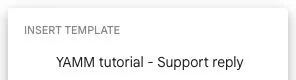
The content of your template will now be copied into your new email. Change the name markers and add your recipients. Once you’re satisfied with your message, click “Send.” You’ve now created and sent out a template!
How to use templates in Gmail?
You can overwrite your Gmail email templates to edit them
To edit a template, insert it into a new draft and make your changes.
Return to “Save draft as template.” Under “Overwrite Template,” choose the existing template and click “Save.” This replaces the saved version with your edited draft.
This is useful when you need to update an old template without adding another version to your template list.
You can delete email templates in Gmail at any time
To remove a saved template, open the compose window’s “Templates” menu, choose “Delete template,” and select the template to remove.
Confirm with “Delete.” Deleted templates cannot be recovered, so check the name before confirming.
You can create email templates with Gmail Layouts
Gmail Layouts lets you add branding to your email. It is available on eligible Google Workspace plans; check Google’s instructions for supported editions.
Compose a new message and open “Layouts” at the bottom of the window. If it is hidden, look under “More options.” To set branding for the default layouts, open “Default styling,” choose your logo, colors, fonts, and footer details, then click “Save Changes.”
Choose a design from “Default layouts” or “My layouts,” then click “Edit layout.” Customize your text, images, sections, and button links in the layout editor.
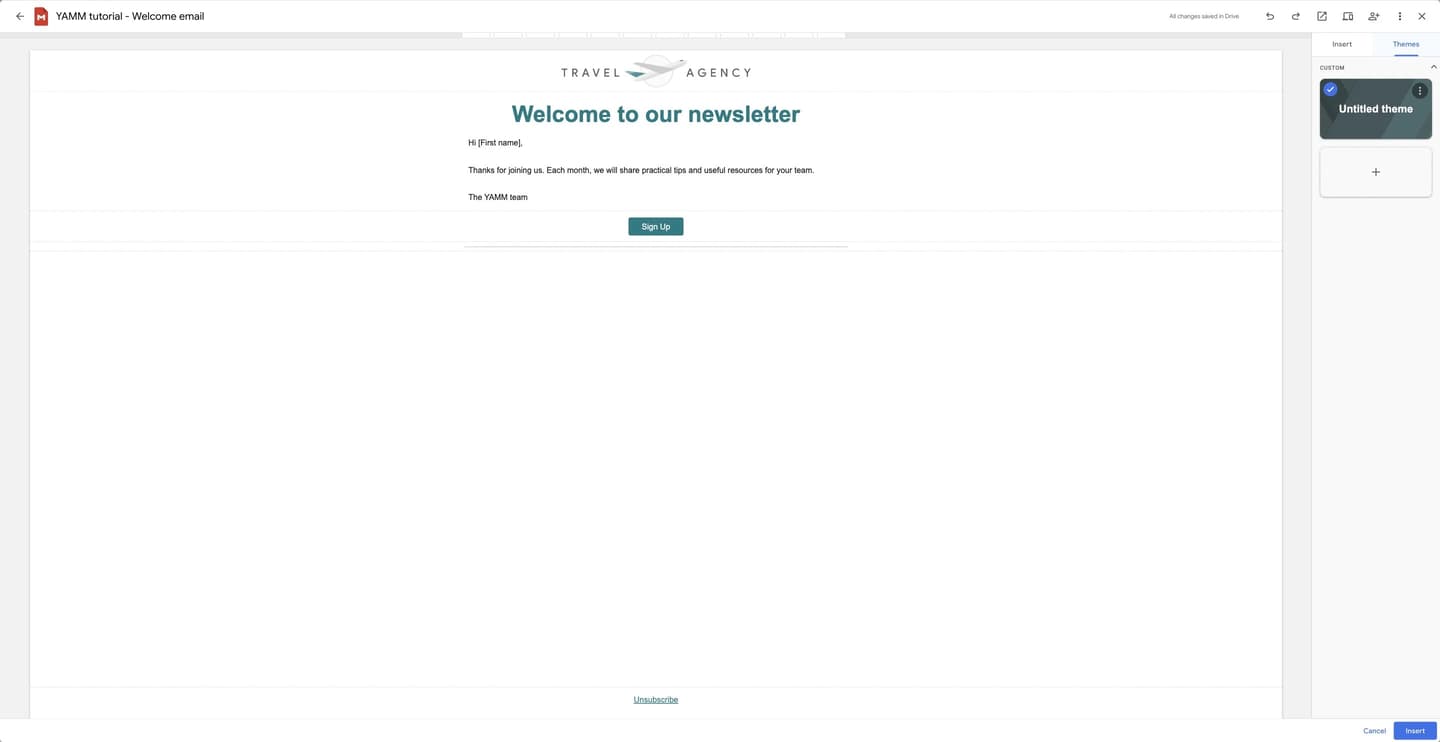
Use Preview to check the mobile, tablet, and desktop views. When ready, click “Insert” to add it to your message, or “Insert in Gmail” if the editor is open full screen.
After insertion, use “Edit” to reopen the layout editor; you cannot edit the layout’s contents directly in the compose draft. Your custom layouts are saved in Google Drive and can be reused through “My layouts.” This is separate from saving ordinary messages in Gmail’s Templates menu.
You now have a branded template you can use for welcome messages, post-purchase emails, or newsletters. And with YAMM, you can send out that branded template to all of your subscribers at once!
Need to send out the same message to a group? Use a mail merge!
That’s it! You should now have no trouble creating a bunch of different templates for any occasion. If you’re sending out your message to an individual, you should have no problem doing so. However, if you’re planning to send out that template en-masse, we suggest using a mail merge like YAMM.
YAMM is an excellent tool for sending mass emails with Gmail. With YAMM, you can upload your contact list from Google Sheets, select the template that you want to use, and YAMM will personalize the email for you in your name markers. With templates and layouts at your disposal, you can use YAMM to build your email marketing efforts right from Gmail.
Install YAMM today and build better email newsletters, announcements, and promotions.