How to Make and Send a Newsletter in Gmail
Updated 6 min read
Table of contents
You can make a newsletter in Gmail as a plain email or with Gmail Layouts. Keep your subscribers in a Google Sheet, and send it with a mail merge so each person gets their own copy. Because it comes from your own Gmail, two jobs are yours: an unsubscribe link in every email, and sending only to people who asked to hear from you.
If you write to 50 or 400 people who know you, like a club, a school class or a small business, this is all you need. It's often better than a newsletter platform: each email arrives as a letter from you, and replies come straight back to your inbox.
Can you use Gmail for newsletters?
Yes. Google itself says its mail merge is for "personalized email campaigns, newsletters, and announcements".
Gmail doesn't give you what newsletter platforms are built around: automated email series and a hosted signup list. If you need a good-looking email, sent to a list you keep yourself, Gmail is enough.
Here's how the three usual ways compare:
| Bcc (hidden recipients) | Gmail's own mail merge | YAMM | |
|---|---|---|---|
| Who can use it | Any Gmail account | Some Google Workspace plans only | Any Google account |
| Each person's name in the email | No, everyone gets the same email | Yes, in the body | Yes, in the subject and body |
| Unsubscribe link | You add your own line | Added to each email automatically | You add YAMM's link once, in the draft |
| Who unsubscribed | You keep track yourself | An email each time, but no list | Listed in the tracking report, and left out of your next sends |
| Who opened or clicked | No | Google's help page doesn't mention it | Written to your sheet, along with who replied |
For how many emails each kind of account can send a day, see Gmail's sending limits.
Does Gmail have newsletter templates?
Yes, on some Google Workspace plans. Gmail Layouts are ready-made email designs. You add your logo, colors and fonts once, plus footer details such as your business name and address. In a new email, click Layouts at the bottom of the window and pick one.
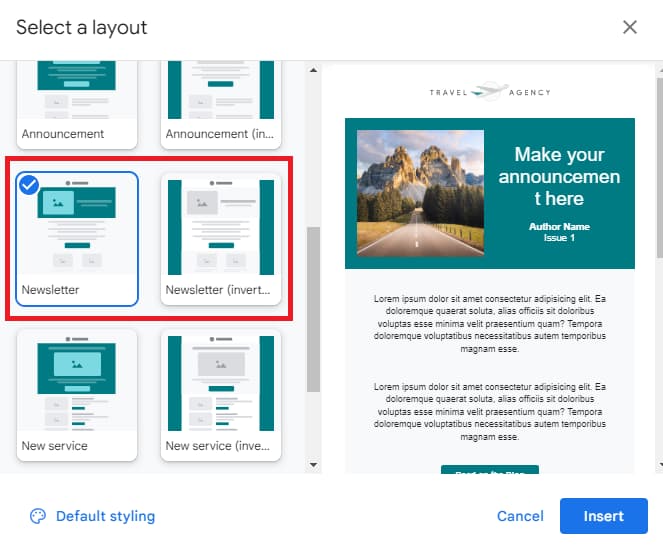
A few things to know before you start:
- Once you insert a layout, you edit it in the layout editor, not directly in the email.
- Change the links of any buttons that come with the layout.
- Use the preview to check the mobile view.
- Give each image alt text, in case it doesn't load.
On a personal @gmail.com account, write the newsletter as a normal email: a short greeting, a few sections with bold headings, and one or two images. Add images inline (not as attachments) so recipients see them, and keep each one under 500 KB when you send with YAMM.
Where should you keep your subscriber list?
In a Google Sheet, with one row per person. You need a column for email addresses. Add a column for anything you want to put in the email, such as first names.
To collect new subscribers, make a Google Form that saves answers to that sheet. YAMM can also send an email every time someone submits the form, so each new subscriber gets a welcome email automatically.
Only add people who asked to hear from you. Google's sender guidelines say: "Make sure recipients opt in to get messages from you." They also say not to buy email lists.
Why not just Bcc everyone?
Bcc works for a few people. For a newsletter it falls short:
- Everyone gets the same email, so you can't greet anyone by name.
- There's no unsubscribe link, so you have to handle "please remove me" replies by hand.
- You can't see who read it.
- Gmail blocks a personal account for 1 to 24 hours if one email goes to more than 500 recipients, or if the account sends more than 500 emails in a day.
If you do use Bcc, end the newsletter with a clear way out, for example: "Don't want these emails? Reply 'unsubscribe' and I'll take you off the list." Then do it. For more on Bcc, see how to send an email without showing the recipients.
How do you send each subscriber their own copy?
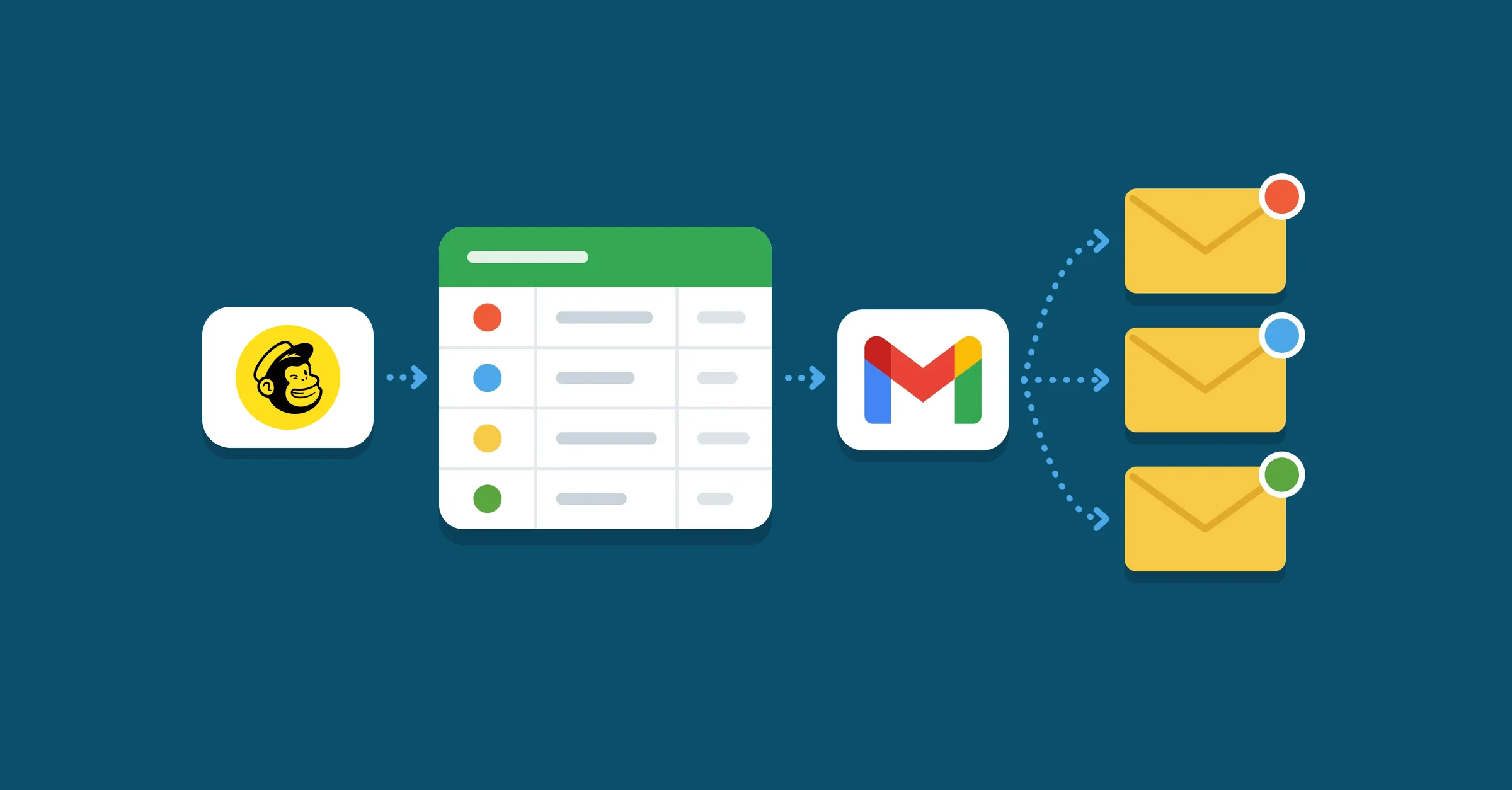
With a mail merge. YAMM sends your newsletter from your own Gmail, one copy per row of your sheet, with each person's details filled in. Here's how:
- Write the newsletter as a Gmail draft. Use a plain email or a layout. Leave the To field empty. Where you want each person's name, type the column's header in double curly brackets, such as
{{First name}}. - Add the unsubscribe link. At the end of the draft, add a line like "Unsubscribe" and link it to
https://app.yamm.com/unsubscribe. Type or paste this address yourself. Don't copy the link from an email you already sent. - Open your subscriber sheet and go to Extensions > Yet Another Mail Merge: Mail Merge for Gmail > Start Mail Merge. If you don't see YAMM in that menu, install it first from the Google Workspace Marketplace. Pick your draft and click Send test email. Open the test and check the images, the links and the name.
- Select Track emails opened, clicked or bounced, then click Send emails. Tracking must be on, or the unsubscribe link won't work.
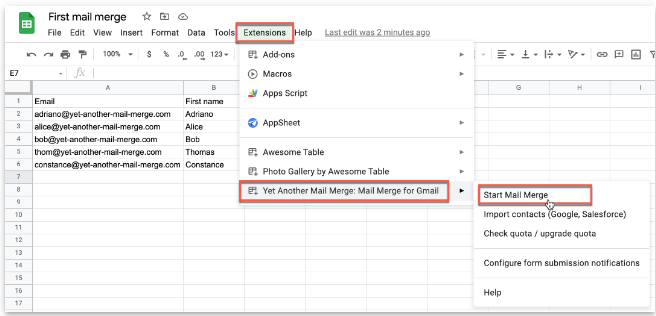
Gmail's own mail merge can't be scheduled. With YAMM, you can send right away or pick a day and time.
What happens after you send?
The tracking report opens in your sheet's sidebar. It shows who opened, clicked, replied, bounced or unsubscribed, and each row of your sheet gets its own status.
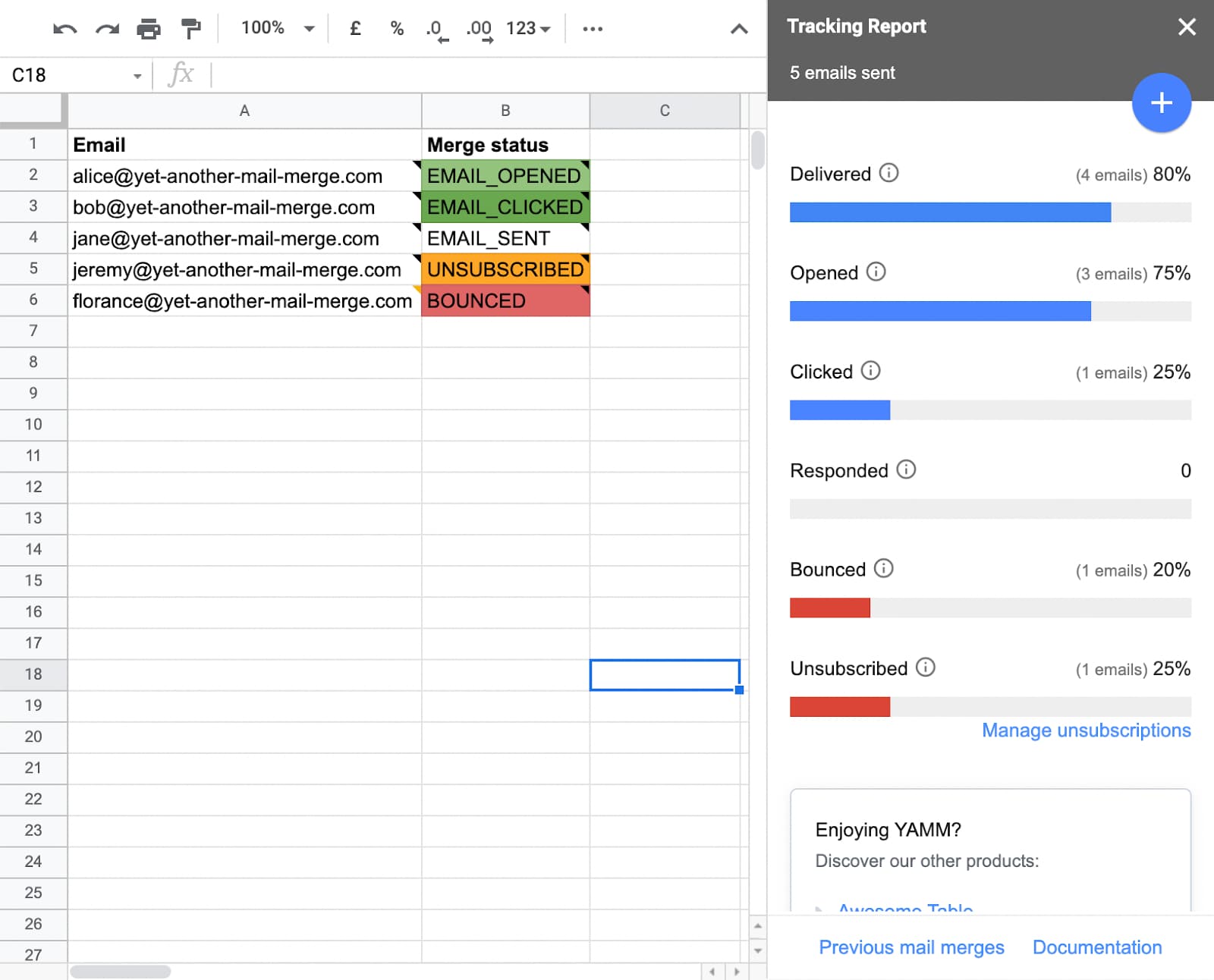
Two things to do with it:
- Answer the replies. A reply is the best sign a newsletter worked.
- Read opens as a trend, not a fact. Google suggests removing people who don't open your emails. Do that only after several newsletters in a row with no opens: tracking "cannot be 100% accurate for each individual email," as our help center says.
We also have a guide to sending a newsletter from Google Sheets with more screenshots of the setup.